
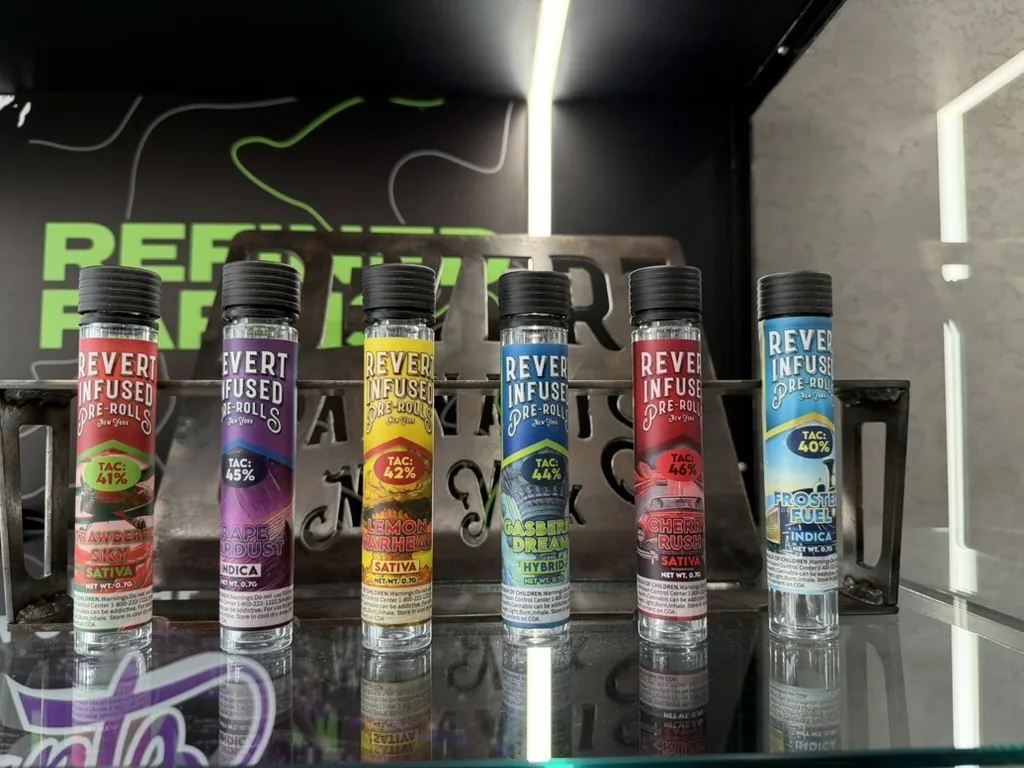
Most legal flower in New York tests somewhere around 15 to 30% total THC, and the strongest top shelf jars usually land in the high 20s to around 30%. Numbers above roughly 35% are rare and can reflect lab variation as much as the plant. THC percentage is a useful starting point, but terpenes, freshness and your own tolerance shape how strong a strain actually feels.
This guide explains what the numbers on a New York label mean, how potency tiers break down, how to read a lab report, and how to find high-THC flower at Quality Control Dispensary in Brooklyn and Staten Island.
What Is the Highest THC Percentage in Weed?
The highest THC percentage you will typically see on retail flower is in the low to mid 30s, and anything past roughly 35% is uncommon. For most shoppers, "high THC weed" means flower in the mid 20s and up. Here is how the typical ranges break down:
- Roughly 15 to 20% total THC: common for everyday and value flower.
- Roughly 20 to 25%: a large share of what sits on dispensary shelves.
- High 20s to around 30%: where most "top shelf" and high-potency flower lands.
- Above roughly 35%: rare. Treat a result like this with some caution, since testing methods and sample handling differ from lab to lab.
These are typical ranges, not guarantees. The same strain can test differently from one grower to the next, and even from one harvest to the next from the same grower.
Total THC vs. THCa on New York labels
Raw cannabis contains very little active delta-9 THC. Most of it is present as THCa, an acidic form that converts to delta-9 THC when it is heated by a flame or a vaporizer. That is why New York flower labels show total THC: it estimates how much THC the flower can deliver once heated, rather than how much is active in the raw bud.
The standard calculation is total THC = (THCa × 0.877) + delta-9 THC. The 0.877 factor accounts for the weight THCa loses as it converts. For example, flower with 25% THCa and 0.5% delta-9 THC works out to about 22.4% total THC. If you see a higher "THCa" number on a lab report, that is not a mistake; total THC is simply the more realistic figure for comparing jars.
Potency Tiers at a Glance
Shelf names vary from store to store, but most flower falls into one of these broad tiers.
| Tier | Typical total THC | What to expect | Who it suits |
|---|---|---|---|
| Mid shelf | Roughly 18 to 24% | Solid potency, sometimes looser trim or less striking bag appeal | Regular consumers who want everyday flower and good value |
| Top shelf | High 20s to around 30% | Dense, well-trimmed buds, strong aroma, heavy trichome coverage | Experienced consumers looking for flavor and potency together |
| Exceptionally high | Above roughly 30%, rarely past 35% | Intense potency; small amounts go a long way | Consumers with a high tolerance who know their limits |
Tier is about more than the number. A well-grown, fresh 24% jar with a loud terpene profile can be a better buy than a 30% jar that has been sitting under warm lights.
Why THC Percentage Isn't the Whole Story
THC percentage tells you how much THC is in the flower. It does not tell you how a strain will feel, and two jars with the same number can feel noticeably different.
Terpenes
Terpenes are the aromatic compounds behind a strain's smell and flavor: citrus from limonene, earthy and musky notes from myrcene, pine from pinene, peppery spice from caryophyllene. Many customers say strains with similar THC but different terpene profiles feel different to them, which is one reason budtenders ask what you like to smell and taste. Our terpenes guide covers the common ones in more detail.
Freshness
THC breaks down over time, especially with heat, light and air, and some of it converts to CBN. Terpenes are even more delicate and fade faster. Fresher flower generally smells stronger and tastes better, so check the packaged or test date and give the jar a smell if the store allows it.
Tolerance
Your tolerance is the biggest variable of all. Someone who consumes daily may find 22% flower mild, while an occasional consumer may find it plenty. If you are newer to cannabis or coming back after a break, a 30% jar is not automatically the better choice. Start with a small amount, wait, and see how you feel before having more. Our cannabis dosing guide has more on pacing.
Is Higher THC Always Better?
No. Higher THC means more potency per gram, not necessarily a better experience. Many experienced consumers choose flower in the low to mid 20s because they prefer its flavor, or because they want something easier to pace. A very high number can also be a reason to use less at a time, which changes how long a jar lasts.
A few practical ways to think about it:
- Match potency to the occasion. A quiet night at home and an afternoon with friends may call for different jars.
- Compare like with like. Use total THC, not THCa, when comparing two jars, and look at the terpene results if they are listed.
- Trust your nose. Strong, clear aroma is often a sign of fresh, well-cured flower.
- Remember batch differences. The same strain name from two growers can test several points apart.
How to Read a New York Label and COA
Every flower product sold at a licensed New York dispensary has been tested by a state-licensed lab. The label gives you the headline numbers, and the certificate of analysis (COA) gives you the detail.
- Total THC: the main potency number, calculated as described above.
- Total CBD: often very low or near zero in high-THC flower.
- Cultivator and batch information: who grew it and which lot it came from, so you can match it to its lab report.
- Dates: look for a packaged or test date to get a sense of freshness.
- Lab report link: many packages include a QR code that leads to the COA.
On the COA itself, you will usually find the THCa and delta-9 THC results that feed into total THC, along with other cannabinoids and, on many reports, a terpene breakdown. The COA also shows the contaminant screening the batch passed. If you cannot find the report, ask a budtender to help you pull it up. For a broader look at choosing a jar, see how to pick weed at a dispensary, and for the basics of the two best-known cannabinoids, read THC vs. CBD.
High-THC Strain Examples
Some strain families have a reputation for testing high, though the actual number always depends on the grower and the batch. Strains like Gorilla Glue, Wedding Cake and Gelato are often bred and grown with potency in mind. Treat these as examples, not promises: always check the total THC on the specific jar in front of you, and check the menu or ask a budtender for what is on the shelf today.
Many customers describe indica-leaning strains as relaxing with a heavier body feel, and sativa-leaning strains as more uplifting and heady. Our sativa, indica and hybrid guide explains why those labels are only a rough guide.
How to Store Flower to Keep It Fresh
The best way to store flower is in an airtight glass jar in a cool, dark place. Good storage helps hold on to both THC and terpenes for longer.
- Keep it airtight. Air exposure dries flower out and speeds up the loss of aroma.
- Keep it dark. Light, especially sunlight, breaks down THC over time.
- Keep it cool and steady. Avoid hot spots like windowsills, car interiors and the top of the fridge.
- Watch the humidity. Flower that is too dry turns harsh, and flower that is too damp can grow mold. A humidity control pack in the jar helps.
- Skip the freezer. Freezing makes trichomes brittle, and they can break off when you handle the bud.
- Handle it less. Every time you squeeze or shake the bud, trichomes come loose.
Store cannabis securely and out of reach of anyone under 21.
Buying High-THC Flower at QCD Brooklyn and Staten Island
Quality Control Dispensary carries lab-tested flower from licensed New York cultivators at both of our stores, and each store keeps its own menu, so selection differs between locations.
Brooklyn: our store at 3169 Coney Island Ave. Browse the Brooklyn flower menu to see current jars and their total THC. Brooklyn prices include tax.
Staten Island: our store at 1172 Victory Blvd. Browse the Staten Island flower menu for that store's lineup. Staten Island prices are shown before tax.
Tell a budtender the potency range you are after, the flavors you like and how often you consume, and they can point you to jars that fit. If you would rather not roll, both menus also carry pre-rolls; start with pre-rolls in Brooklyn.
You must be 21 or older with a valid ID to purchase. Consume only where it is legally allowed, and never drive after consuming.